
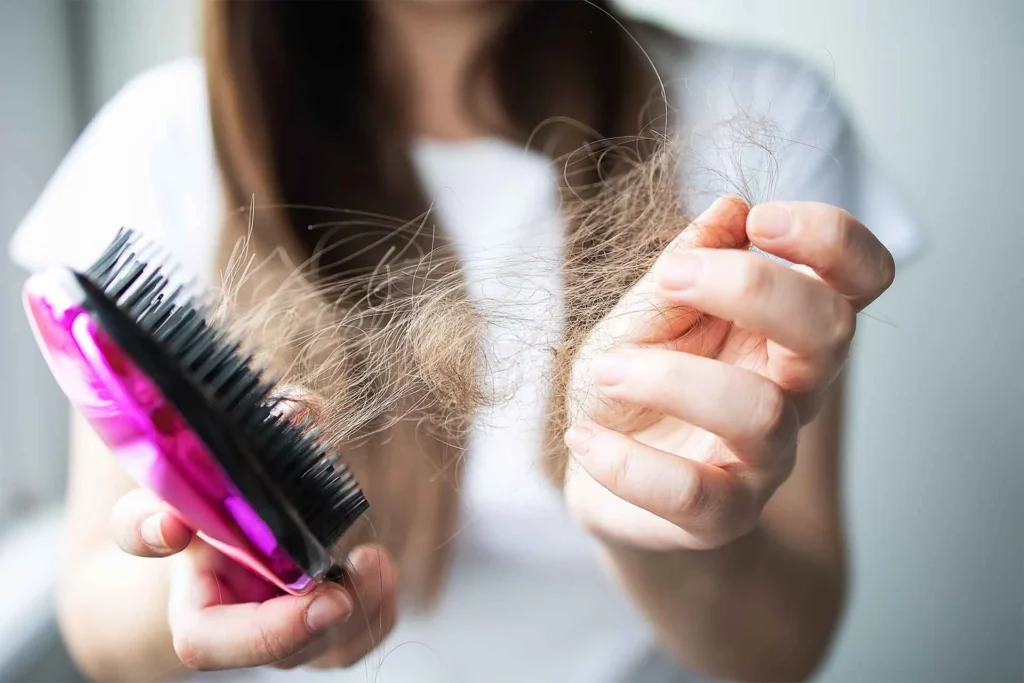
Hair loss is a common and often distressing condition that affects more than 80 million Americans. While hormones are frequently blamed, they account for only a portion of hair loss cases. In reality, hair loss is multifactorial and can be triggered by chronic stress, severe illness, genetic predisposition, nutrient deficiencies, thyroid dysfunction, inflammatory conditions, autoimmune activity, chemotherapy, fungal or scalp infections, damaging hair care practices, and major hormonal shifts such as postpartum changes or menopause. Because hair follicles are highly sensitive to internal and external stressors, identifying and addressing the root cause is essential for meaningful and lasting improvement.
Hair growth does not occur continuously but instead follows a predictable cycle consisting of three phases. The first phase, known as the anagen phase, is the active growth stage and determines the length and thickness of the hair. During this phase, hair grows approximately one centimeter every four weeks and may remain in active growth for two to six years. At any given time, roughly 80 to 90 percent of scalp hair is in the anagen phase. Adequate thyroid hormone signaling, balanced sex hormones, proper nutrition, and healthy blood flow help support a longer anagen phase, while inflammation, stress hormones, and certain genetic patterns can shorten it and limit growth potential.
The second phase of the hair cycle is the catagen phase, a brief transitional period lasting approximately two to three weeks. During this phase, hair growth stops, the follicle shrinks, and the hair detaches from its blood supply. Only a small percentage of scalp hairs—typically 1 to 3 percent—are in this phase at any given time. The final phase is the telogen phase, or resting phase, which lasts about three months. During telogen, hairs are no longer actively growing and are eventually shed as new hairs begin to form. It is normal to shed approximately 25 to 100 hairs per day during this phase, and telogen hairs are often identified by a small white bulb at the root.
When underlying contributors such as stress, inflammation, nutrient deficiencies, or hormonal imbalances disrupt this cycle, hair follicles may prematurely enter the telogen phase or fail to re-enter the anagen phase, leading to thinning and excessive shedding. In these cases, dietary changes, targeted supplementation, and gentle hair care may provide support, but they are often not enough to fully reverse hair loss once follicular signaling has been compromised.
Platelet-rich plasma (PRP) therapy offers a regenerative, non-pharmaceutical option for individuals struggling with hair thinning and hair loss. PRP is derived from a patient’s own blood and contains a concentrated supply of platelets rich in growth factors that support tissue repair, angiogenesis, and cellular signaling. When injected into the scalp, PRP delivers these growth factors directly to the hair follicle environment, where they help stimulate dormant follicles, improve blood flow, reduce inflammatory signaling, and prolong the anagen phase of the hair cycle. PRP therapy is commonly used for androgenic alopecia, stress-related hair loss, post-illness shedding, and hormonally driven thinning in both men and women.
Hair restoration is most successful when PRP therapy is combined with a comprehensive, individualized approach that addresses internal contributors such as hormone balance, thyroid function, nutrient status, inflammation, and stress physiology. While results take time and consistency, many patients notice reduced shedding within the first few months followed by gradual improvements in hair thickness, density, and overall scalp health. By supporting the body’s natural regenerative processes, PRP therapy offers a safe and effective option for breaking the cycle of hair loss and restoring healthier hair growth.
True healing begins at the root. If you’re ready for a personalized, root-cause approach to your health, we invite you to contact our office to schedule a consultation.
